INDUSTRIES / AEROSPACE
Carbon Fiber Structures for Advanced Aerospace Systems.
Drawing-led carbon fiber panels, tubes and precision components for lightweight aerospace equipment and structural concepts.
Engineering lightweight aerospace structures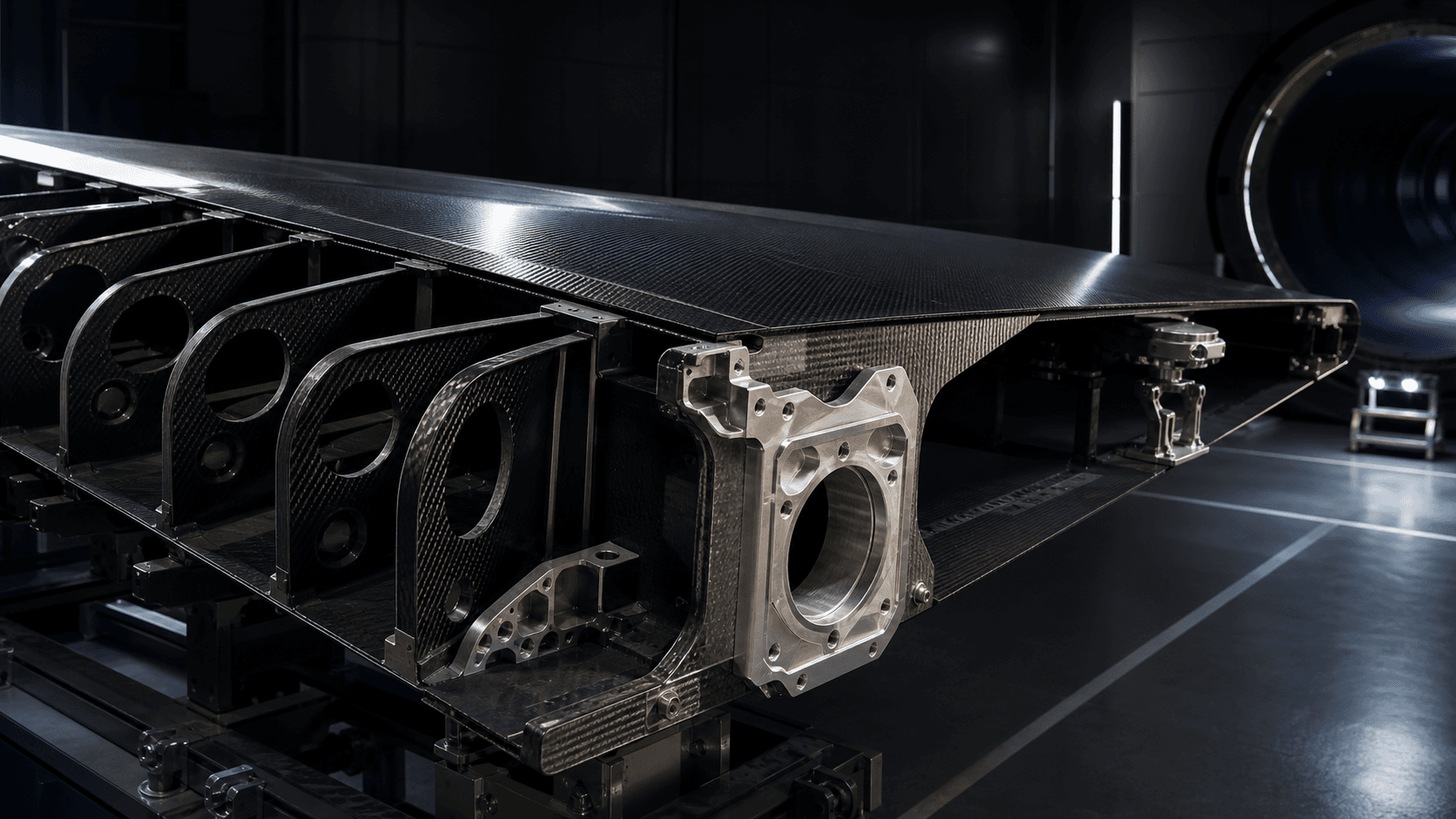
01 / Overview
Engineering lightweight aerospace structures
Aerospace structures place strong emphasis on mass efficiency, stiffness, dimensional control and carefully defined interfaces. Carbon fiber composites allow reinforcement to be oriented around load paths, but they must be engineered as laminates rather than treated as direct metal replacements.
TX COMPOSITE supports sheet, tube, CNC-machined and custom component projects from customer drawings. Material, layup, joints, tolerance, inspection and operating environment require project-specific review. We do not claim aircraft, aerospace or flight certification without verified supporting documentation.
02 / Material logic
Why carbon fiber for aerospace components?
Carbon fiber can provide useful specific strength and stiffness while giving engineers control over laminate direction, geometry and component mass.
Lightweight structure
Lower structural mass can create design margin for equipment, payload or supporting systems.
High specific strength
Continuous fibers can be aligned with primary loads to use material efficiently.
Structural stiffness
Engineered panels, tubes and ribs can provide bending resistance at controlled mass.
Dimensional stability
Suitable laminates can support stable mounting and alignment interfaces when the environment is considered.
Corrosion resistance
Composite laminates do not rust, while metallic inserts and galvanic interfaces still need isolation.
Design flexibility
Sheets, tubes and machined nodes can form assemblies with project-specific geometry.
03 / Applications
Key aerospace applications
These are general component directions for technical evaluation, not certified end-use claims.
Structural components
Lightweight concepts for defined load paths and assembly interfaces.
- Structural panels
- Wing-box and rib concepts
- Lightweight brackets
- Custom composite structures
Equipment integration
Precision parts used to locate and support technical equipment.
- Equipment mounting plates
- Instrument supports
- Interior structural components
- Machined interface plates
Aerospace development
Drawing-led components for prototypes, fixtures and engineering evaluation.
- Development assemblies
- Inspection fixtures
- Prototype panels
- Custom CNC carbon parts
04 / Products
Recommended carbon fiber products
Sheets, tubes, machined parts and custom components support different aerospace structural and equipment-integration concepts.
05 / Capabilities
Aerospace manufacturing capabilities
Scope is confirmed after reviewing drawing revision, geometry, material, tolerance, quantity and inspection requirements.
- 01Precision CNC machining
- 02Custom cutting
- 03Drilling and milling
- 04Custom hole patterns
- 05Tube and sheet processing
- 06Prototype manufacturing
- 07Small-batch production
- 08Drawing-based inspection
06 / Project scope
Drawing-led aerospace component review
Provide the current drawing, application, load direction, mating interfaces and inspection requirements. We review whether sheet, tube, machined laminate or a custom composite route is the appropriate starting point.
Compliance, qualification and final validation remain the responsibility of the project owner and relevant qualified authorities.
Accepted project files
Manufacturing route
Drawing review
Confirm revision, geometry and interfaces.
Material review
Evaluate format, laminate direction and thickness.
Manufacturing
Machine to the approved definition.
Inspection
Check defined dimensions and finish.
Delivery
Protect and ship the completed components.
07 / Resources
Related technical resources
Review carbon fiber fundamentals, laminate direction and material comparison considerations.