INDUSTRIES / INDUSTRIAL & ROBOTICS
Precision Carbon Fiber Components for Modern Automation.
Lightweight tubes, plates and CNC components for robotics, automation, inspection and precision industrial equipment.
Low-mass structures for controlled motion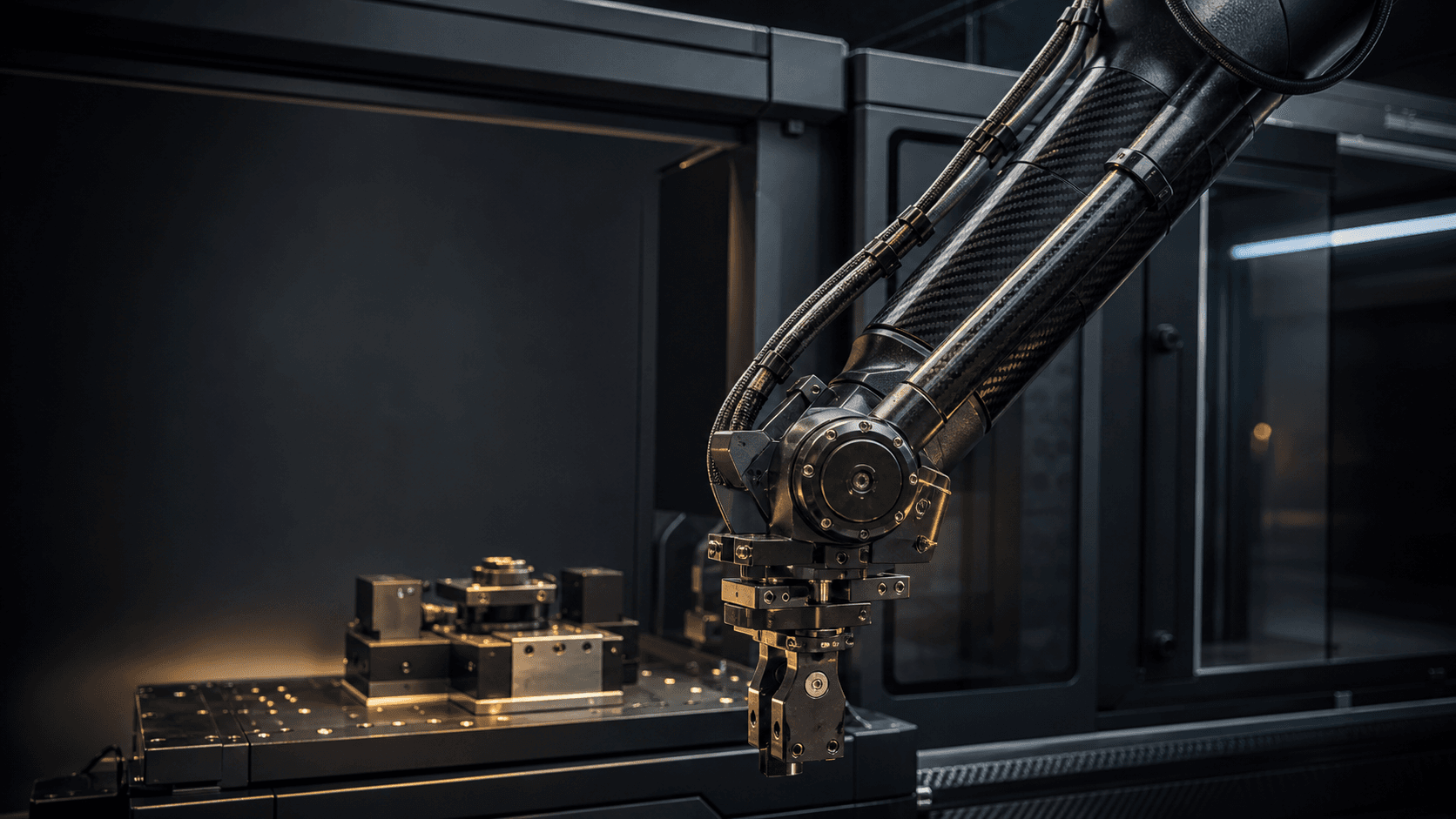
01 / Overview
Low-mass structures for controlled motion
Moving mass matters in robotics and automation. Replacing a suitable moving component with a carefully engineered carbon fiber structure may help reduce inertia and the load carried by the drive system. The complete arm, joint, fastener and control strategy must still be evaluated as one system.
TX COMPOSITE supports carbon fiber sheets, tubes, CNC-machined plates and custom structural components. We work from drawings to review geometry, hole patterns, interfaces, thickness, finish and inspection requirements for prototypes, small batches and repeat OEM production.
02 / Material logic
Why carbon fiber for industrial automation?
Carbon fiber is most useful when its anisotropic behavior is deliberately included in the design. Fiber direction and joint design are as important as the outline of the part.
Lightweight moving components
Lower moving mass may help improve motion efficiency and reduce inertial demand in a correctly designed mechanism.
High rigidity
Tubes and laminates can provide useful bending stiffness for arms, beams and frames.
Low inertia
Reduced mass away from a rotation axis can support faster or more controlled motion, subject to system validation.
Dimensional stability
A suitable laminate can support stable sensor, vision and measurement interfaces.
Corrosion resistance
Composite structures suit many industrial environments, while joints and surface exposure still require review.
Custom geometry
CNC cutting, drilling and milling enable project-specific profiles and interfaces.
03 / Applications
Key industrial and robotics applications
The following categories show where low mass, stiffness and controlled geometry can be valuable.
Robotics
Structural parts for moving systems and end-of-arm tooling.
- Robotic arms and tube links
- Structural plates
- End-effector components
- Mounting plates and brackets
Automation
Rigid, lightweight supports for sensors, cameras and machine subsystems.
- Machine-vision frames
- Sensor mounts
- Equipment plates
- Precision fixtures
Industrial equipment
Components for inspection, measurement and special mechanical assemblies.
- Lightweight machine components
- Inspection equipment frames
- Measurement equipment
- Custom mechanical assemblies
Custom structures
Drawing-led combinations of tube, plate and machined interfaces.
- Tube-and-plate frames
- Custom hole patterns
- Structural carbon fiber parts
- Prototype mechanisms
04 / Products
Recommended carbon fiber products
Sheets, tubes and machined parts can be combined to create rigid, low-mass structures with precise equipment interfaces.
05 / Capabilities
Industrial manufacturing capabilities
Tolerance, edge, hole quality and assembly interfaces are reviewed against the drawing before production.
- 01Precision CNC machining
- 02Cutting
- 03Drilling and milling
- 04Custom hole patterns
- 05Custom dimensions
- 06Prototype manufacturing
- 07Small-batch production
- 08OEM manufacturing
06 / Project scope
From drawing to component
A useful RFQ identifies the component's motion, load direction, attachment points, critical dimensions, finish and production quantity. Our engineering review then defines the carbon fiber format and manufacturing path that can be evaluated against those requirements.
For assemblies, the review also considers inserts, fasteners, adhesive interfaces, edge distance and access for installation. Specific performance remains subject to design validation in the customer's complete system.
Manufacturing route
Send drawing
Share the current CAD file and technical requirements.
Engineering review
Review geometry, interfaces, tolerances and manufacturability.
Material and thickness selection
Evaluate laminate format and thickness for the stated application.
CNC machining
Manufacture the approved contours, holes and features.
Dimensional inspection
Check defined dimensions against the approved drawing.
Delivery
Package and arrange shipment for the finished components.
07 / Resources
Related technical resources
Compare carbon fiber with aluminum and prepare better drawings for CNC-machined composite parts.