INDUSTRIES / AUTOMOTIVE
Carbon Fiber for Performance, Lightweighting and Precision.
Material formats and drawing-led manufacturing for automotive structures, aerodynamic parts, interior trim and custom performance components.
Engineering carbon fiber around the vehicle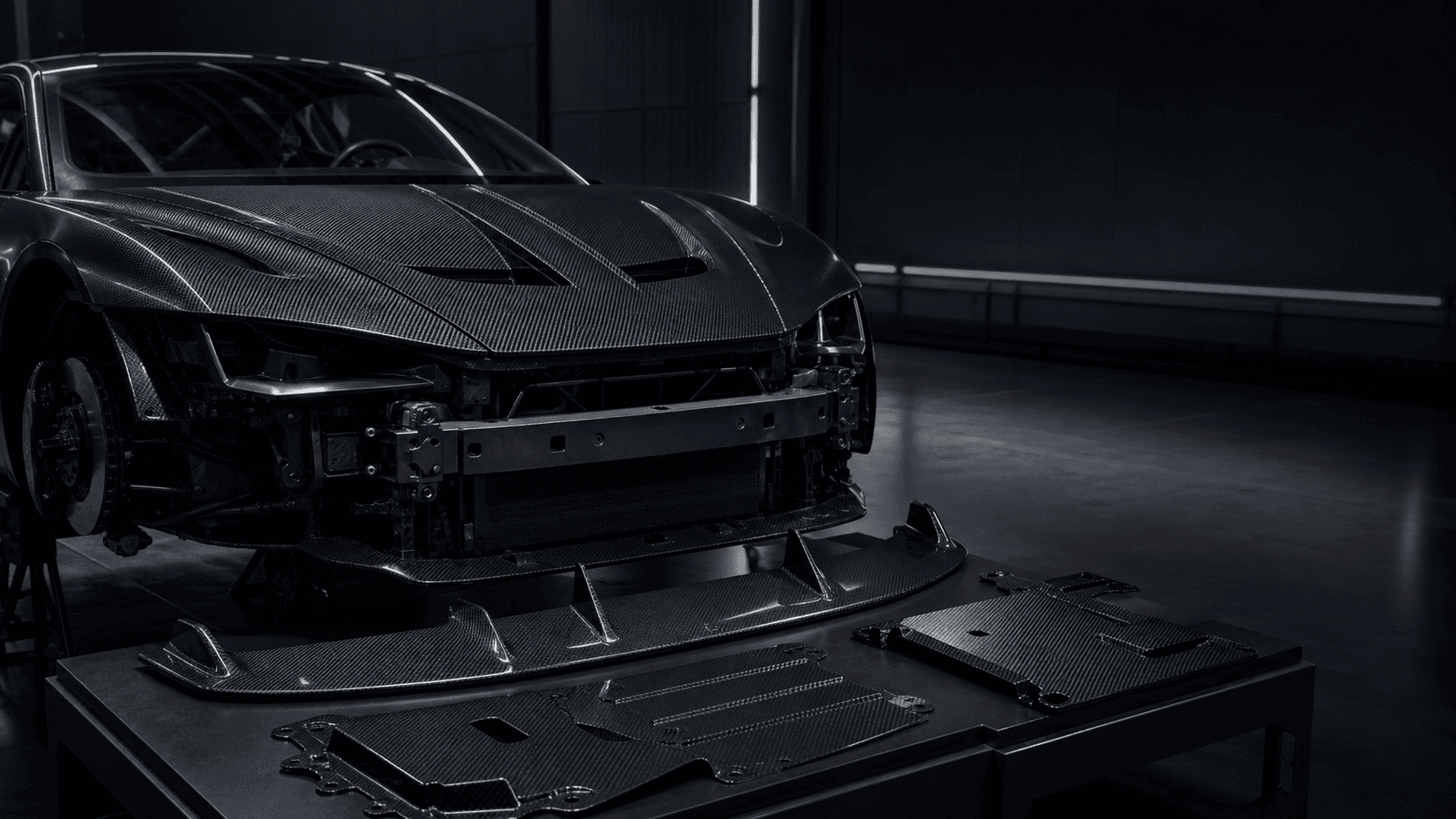
01 / Overview
Engineering carbon fiber around the vehicle
Automotive carbon fiber parts can combine low mass, structural stiffness and a distinctive technical surface. The right solution depends on the part's function: a cosmetic interior panel, an aerodynamic exterior component and a loaded mounting bracket require different laminate, thickness, finish and machining decisions.
TX COMPOSITE supports projects from carbon fiber sheet and thin laminate supply to CNC-machined and custom components. We review the drawing, assembly interfaces, surface direction, quantity and intended environment before proposing a manufacturing route. Application examples on this page describe common industry uses and do not imply supply to any named vehicle manufacturer.
02 / Material logic
Why carbon fiber for automotive components?
Carbon fiber composites give designers a useful combination of structural and visual properties. Final part performance is governed by fiber grade, resin system, laminate design, geometry and load direction, so material selection should follow the real application.
Lightweight construction
Lower component mass can support vehicle lightweighting where the complete design and assembly are engineered accordingly.
Strength-to-weight efficiency
Continuous fibers can carry high loads relative to mass when they are aligned with the primary load paths.
Structural stiffness
A suitable laminate can provide rigidity for panels, brackets and reinforcement components without relying on a heavy solid section.
Surface appearance
Twill or plain weave, matte or gloss finishes can make the material itself part of the visual design.
Corrosion resistance
Composite laminates do not rust, although inserts, fasteners and interfaces still require compatible material design.
Design flexibility
Flat laminates, machined profiles and custom formed parts offer different paths for geometry, edge and assembly requirements.
03 / Applications
Key automotive applications
The examples below are starting points for engineering review. Thickness, layup, mounting and finish should be confirmed against the part's functional requirement.
Exterior components
Lightweight panels and aerodynamic surfaces where geometry, edge quality and finish are important.
- Hoods and roof panels
- Splitters, spoilers and wings
- Diffusers and body panels
- Custom aerodynamic components
Interior components
Visible technical surfaces and lightweight trim designed around the vehicle interface.
- Interior trim
- Dashboard panels
- Center-console components
- Decorative carbon fiber parts
Performance components
Drawing-based parts for mounting, reinforcement and lightweight mechanical assemblies.
- Structural brackets
- Mounting plates
- Reinforcement components
- Custom lightweight parts
Motorsport applications
Prototype, low-volume and custom components developed around packaging and aerodynamic requirements.
- Racing panels
- Aerodynamic components
- Lightweight covers
- Custom CNC carbon fiber parts
04 / Products
Recommended carbon fiber products
These product families cover the most common starting points for automotive panels, trim, machined interfaces and project-specific components.
05 / Capabilities
Automotive manufacturing capabilities
Manufacturing scope is confirmed after reviewing geometry, tolerance, finish, quantity and assembly requirements.
- 01CNC machining
- 02Precision cutting
- 03Drilling and milling
- 04Custom dimensions
- 05Custom thickness review
- 06Prototype production
- 07Small-batch production
- 08OEM manufacturing
06 / Project scope
Engineering and custom automotive solutions
Send a 2D or 3D drawing, a reference sample, or a clear description of the component. Our review considers material format, laminate direction, cut geometry, hole patterns, edge condition, surface finish and the interfaces to other vehicle parts.
Prototype and small-batch routes can be evaluated before repeat production. When a requirement cannot be verified from the supplied information, it is identified for confirmation instead of being assumed.
Useful project inputs include application, CAD drawing, dimensions, thickness, quantity, finish, assembly method and target delivery location.
07 / Resources
Related technical resources
Review the material fundamentals, compare carbon fiber with aluminum and understand how sheet thickness affects a component concept.