INDUSTRIES / UAV & DRONE
Lightweight Carbon Fiber Solutions for Advanced UAV Platforms.
Sheets, tubes and precision-machined components for drone frames, arms, payload structures and prototype UAV systems.
Lightweight structures for UAV development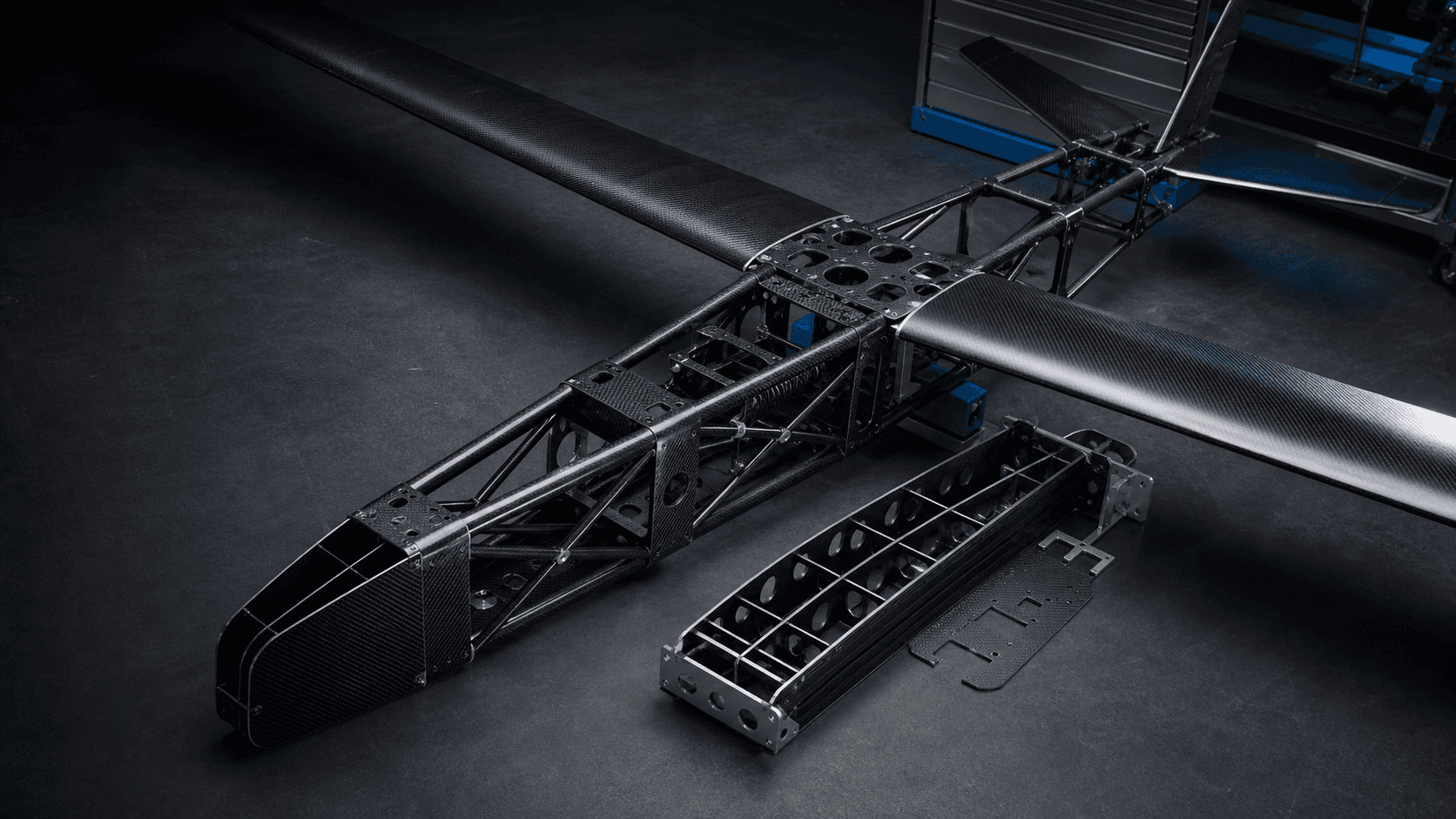
01 / Overview
Lightweight structures for UAV development
Weight, stiffness and dimensional control influence the architecture of an UAV platform. Carbon fiber sheets, tubes and CNC parts provide flexible building blocks for frames, arms and equipment interfaces.
TX COMPOSITE reviews drawings, geometry, hole patterns, material format and quantity for prototypes, small batches and OEM projects. No flight, aerospace or military certification is claimed.
02 / Material logic
Why carbon fiber for UAV platforms?
A properly designed composite structure can place stiffness and strength along the required directions while controlling mass.
Lightweight
Lower frame mass can create system design margin.
High stiffness
Tubes and plates can resist bending in arms and frames.
Strength-to-weight efficiency
Continuous fibers carry load efficiently when correctly oriented.
Dimensional stability
Stable interfaces support motors, cameras and payloads.
Custom geometry
CNC machining enables project-specific outlines and holes.
Prototype flexibility
Sheet-and-tube systems support iterative airframe development.
03 / Applications
Key UAV applications
Component examples for engineering review, without claims of certified flight use.
Airframe structures
Core elements for lightweight drone architecture.
- Drone frames
- UAV structural plates
- Carbon fiber arms
- Landing-gear components
Propulsion interfaces
Machined components around motors and arm connections.
- Motor-mount plates
- Custom hole patterns
- Arm connection plates
- CNC frame components
Payload integration
Structures for cameras, electronics and mission payloads.
- Camera mounts
- Payload structures
- Electronics trays
- Custom support brackets
04 / Products
Recommended carbon fiber products
Sheets, tubes, thin laminates and CNC parts support different UAV frame and payload requirements.
05 / Capabilities
UAV manufacturing capabilities
Geometry, tolerance, edge, hole pattern and quantity are confirmed from the drawing.
- 01CNC machining
- 02Precision cutting
- 03Custom hole patterns
- 04Drilling
- 05Custom dimensions
- 06Prototype manufacturing
- 07Small-batch manufacturing
- 08OEM manufacturing
06 / Project scope
UAV custom manufacturing
Send the airframe or component drawing together with application, interfaces, material preference and quantity.
The manufacturing route proceeds through drawing review, material selection, machining, inspection and protected shipment. Final flight validation remains the project owner's responsibility.
Accepted project files
Manufacturing route
Drawing review
Confirm geometry and interfaces.
Material selection
Review sheet, tube, thickness and finish.
Machining
Cut, drill and mill approved features.
Inspection
Check dimensions and surface.
Shipping
Protect and deliver the parts.
07 / Resources
Related technical resources
Explore tube applications and CNC considerations for composite frames.